What aspects of construction in Cyprus most often surprise foreign clients?
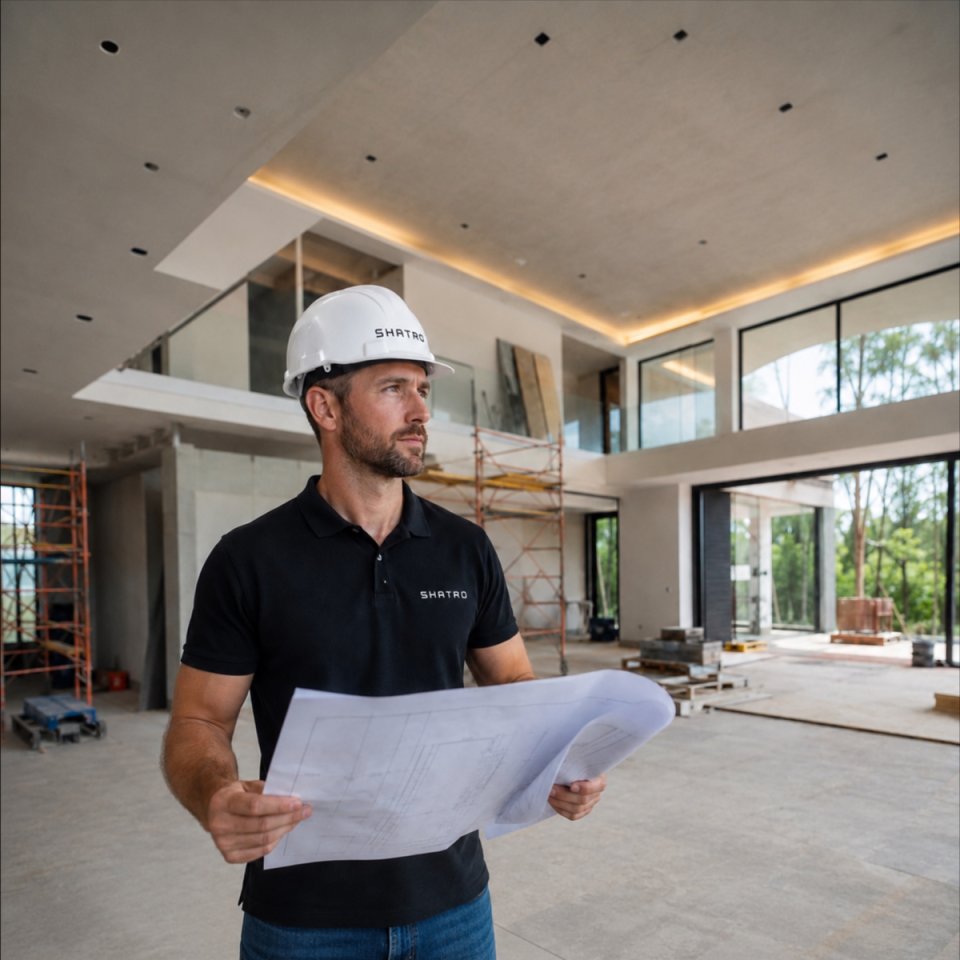
Cyprus has long attracted those who see the island not only as a holiday destination, but also as a place for permanent living. However, a beautiful sea view and modern architecture do not yet guarantee that a home will truly be comfortable. For foreigners, construction in Cyprus often comes with surprises that become apparent during the project or after moving in.
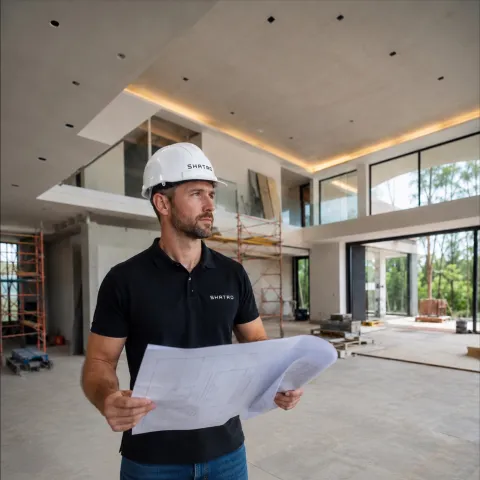
Over four years of working on the island, the SHATRO team has become well acquainted with local practices. Some aspects of construction in Cyprus still raise questions even among professionals. Pavel Apostu, the company’s Commercial Director, highlights several points that future property owners in Cyprus should pay particular attention to.
Architecture Designed for Sale
One of the first surprises is the difference between an impressive presentation of a property and the convenience of actually living in it. Many villas are initially designed as a product for the real estate market. As a result, priority is given to solutions that look good in visualizations and photographs: panoramic glazing, open-plan living rooms, swimming pools, and spacious terraces.
After moving in, completely different details may come to light. For example, a lack of privacy, too little storage space, the absence of necessary technical rooms, or an inconvenient room layout. Sometimes engineering systems have to be adapted after the main work has already been completed.
That is why building a villa in Cyprus for a specific owner has an important advantage over buying a ready-made standard property. The architectural design can be developed taking into account the family composition, habits, lifestyle, and privacy requirements. In this case, the house is designed not for sale, but for the people who will use it every day.
Workmanship That Needs to Be Controlled
The second feature is the quality of execution. A foreign client, especially one with construction experience in other countries, may expect a high standard even for basic work. In practice, one may encounter:
- uneven walls and corners;
- careless tile installation;
- inconsistent joints;
- other visible finishing defects.
On an ordinary project, such shortcomings may be treated as routine issues. For premium real estate, this approach is unacceptable. Quality control is necessary not only before handover, but also at intermediate stages.
Therefore, when choosing which construction company in Cyprus will handle the project, it is worth looking not only at the portfolio. It is important to understand how construction project management is organized, who is responsible for technical and architectural supervision, and how contractors’ work is controlled.
Engineering Must Work as a Unified System
The comfort of a modern home largely depends on its engineering systems: air conditioning, heating, ventilation, lighting, water supply, and automation. All these systems must be interconnected as early as the design stage.
According to the observations of the SHATRO team, integrated solutions are not very common on the local market. Sometimes systems operate separately and do not take one another into account. As a result, a house that looks modern from the outside may fail to meet the owner’s expectations in terms of comfort.
When building a house in Cyprus, the SHATRO team pays special attention to engineering design. This makes it possible to define system requirements in advance and connect them with the architecture, layout, and future operation of the home.
Materials Are Only Half the Result
The high price of finishing materials does not in itself guarantee quality. More affordable local materials can also deliver a good result if the designer has selected the combinations correctly and the installation is carried out professionally. It is often the quality of implementation that becomes decisive.
Problems arise when the desire to save money affects both materials and installation at the same time. Even good tiles, sanitary ware, doors, or other finishing elements lose their advantages if installed incorrectly. Correcting such mistakes after the renovation is completed is usually more difficult and more expensive than doing the work properly the first time.
That is why turnkey construction in Cyprus requires control not only over purchases and the construction budget, but also over how specific materials are used on site. Responsibility for the result should lie with a construction contractor in Cyprus capable of controlling the entire chain of work.
Engineering Calculations Cannot Be Replaced by “Rule-of-Thumb” Decisions
A separate problem is the absence of full-fledged engineering calculations. During design, it is necessary to take into account:
- cooling and ventilation;
- water supply;
- room areas and glazing;
- thermal load;
- lighting and different lighting scenarios.
All systems must correspond to the actual load and the specific ways in which the house will be used. Without calculations, shortcomings are often discovered after moving in, when they are more difficult to correct.
Lighting requires particular attention. In standard properties, it is sometimes designed only formally, without considering how much light each zone needs and how people will use the space.
For an owner who has decided to buy a plot and build a house in Cyprus, an engineering design helps avoid many compromises. Architecture and engineering are best developed in parallel, rather than leaving technical issues to be solved after construction.
Waterproofing and Humidity Require Special Attention
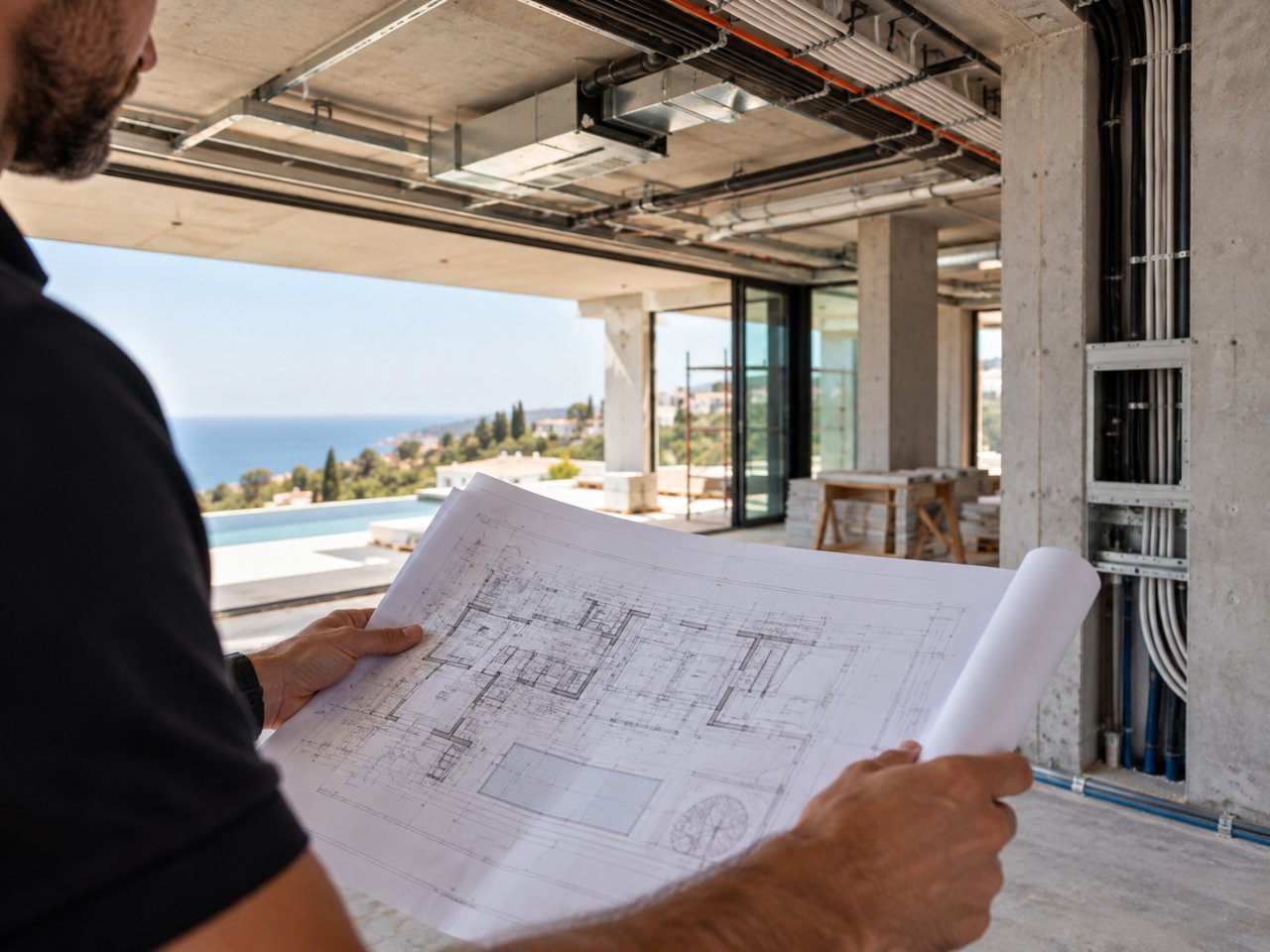
The warm climate of Cyprus sometimes creates the mistaken impression that protecting a building from moisture is of secondary importance here. In practice, waterproofing remains one of the critically important elements. Mistakes at this stage can lead to damp structures, mold and mildew, and damage to finishes.
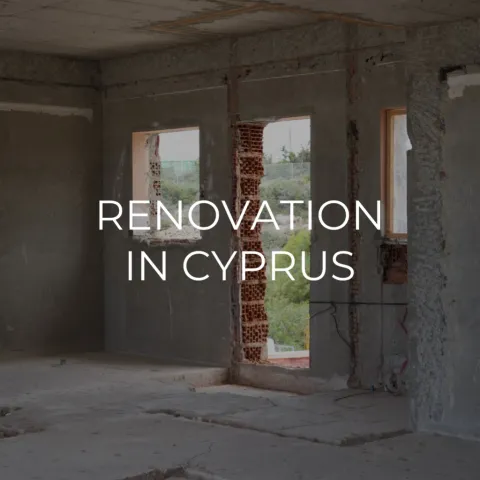
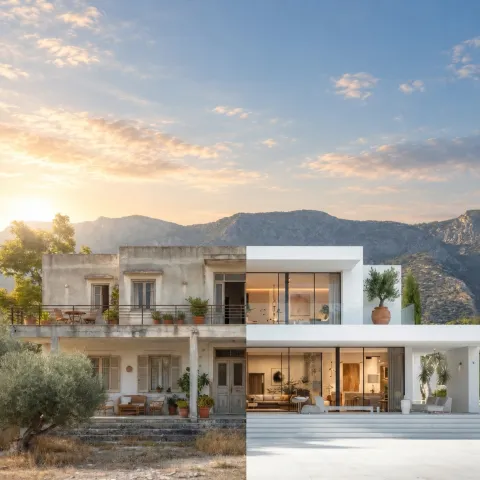
This issue must be checked especially carefully when renovating existing properties. If the previous solution is not performing its function, it is not enough simply to hide it behind new finishes — the problematic assembly has to be redone.
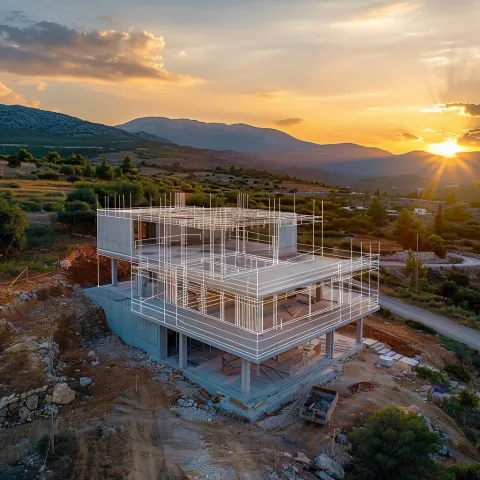
In new construction, proper waterproofing can be incorporated into the project from the very beginning. This is one of the reasons why the specific features of construction in Cyprus need to be taken into account before workers arrive on site, rather than trying to correct the consequences after buying a house.
Energy Efficiency Is the Result of a Set of Solutions
Energy efficiency has become one of the basic principles of modern design. It depends on a combination of solutions: architecture, home insulation, engineering systems, and glazing.
In Cyprus, this area is still developing. Individual energy-efficient solutions are used, but a comprehensive approach is often lacking. It is the combination of technologies that helps make a home more comfortable and reduce operating costs.
This is important to consider when planning turnkey construction in Cyprus. The solutions incorporated into the project affect both comfort and the owner’s future expenses.
Large Glazing Has a Downside
Panoramic windows look natural in modern Mediterranean architecture. They open up views, fill rooms with natural light, and visually connect the interior with the terrace and the plot. However, a large glass area also affects the building’s thermal conditions and the load on air conditioning.
That is why building a villa in Cyprus begins long before the foundation appears. The earlier architects and engineers work through the key solutions together, the less likely it is that the owner will later have to adapt to their own home.
A House Is a Unified System
Building a house in Cyprus requires a comprehensive approach — from the initial concept and design development to supervising work on site. It is important to understand in advance not only what the property will look like, but also how people will live in it.
This is exactly the principle SHATRO follows. For the team, a house is not a set of separate beautiful solutions, but an interconnected system in which architecture and technology must work for the owner’s comfort. This approach is especially important when construction in Cyprus for foreigners involves creating an individual home with requirements that are significantly higher than the standard market offering.